Knowing how to tell if shoes are too big comes down to three things: your heel lifts when you walk, your toes slide forward when you stop, or your foot shifts inside the shoe with every step. If any of those sound familiar, your shoes are too big. For anyone spending a full shift on their feet, that's not a minor annoyance — it's a safety problem. Start with our detailed guide on how to tell if boots fit right to understand exactly what proper fit looks and feels like before you go any further.

Most people assume that bigger means safer — more room equals more comfort, right? That logic falls apart fast on a job site. Oversized shoes create excess friction, cause blisters, strain tendons, and dramatically increase your risk of ankle sprains on uneven ground. The right shoe holds your foot firmly without squeezing it. Size up for the wrong reasons, and you trade one problem for a worse one.
Here's a no-fluff breakdown of what to look for, what it means, and what to do about it.
Contents
How to Tell If Shoes Are Too Big: The Warning Signs
Red Flags Your Shoes Are Too Big
Pay attention to what your foot is doing inside the shoe while you wear it — not just how it feels standing still at the store. These are the most reliable warning signs:
- Heel slippage — Your heel lifts off the insole when you walk. This is the single clearest sign the shoe is too long or has too much volume.
- More than a thumb's width of toe space — Press your thumb down at the tip of the shoe above your longest toe. If there's significantly more than half an inch of gap, the shoe is too long.
- Side-to-side foot movement — Your foot drifts left or right inside the shoe when you turn or shift your weight. This signals excess width or overall volume.
- Heel and toe blisters after one shift — Blisters form where friction is highest. In an oversized shoe, that's your heel and the tips of your toes, both moving against the upper with every step.
- Laces that won't stay tight — You keep cinching down but the shoe still feels loose around the midfoot. That's a volume mismatch, not a lacing problem.
- Toe curling or gripping — Your toes curl downward to grip the insole and prevent your foot from sliding. This puts chronic stress on your plantar tendons.
- Slapping gait — The front of the shoe slaps the ground before your foot fully rolls through each step. The shoe is leading your foot instead of moving with it.
Two or more of these signs together means the shoe is too big. One sign alone warrants a second look, especially if you're early in the break-in period.
What a Proper Fit Actually Feels Like
A well-fitting work shoe feels like a firm handshake — secure without crushing. Here's what you're looking for:
- Roughly half an inch of space between your longest toe and the front of the shoe
- Your heel stays planted on the insole — no lift, no slip, even walking uphill
- The widest part of your foot aligns with the widest part of the shoe's outsole
- No pinching, pressure points, or numbness anywhere on the foot
- You can wiggle your toes freely without your whole foot moving
- Comfortable from the first wear — quality work boots don't require a painful break-in period to feel right
When to Size Up — and When to Stand Firm
Valid Reasons to Go Half a Size Up
Sometimes sizing up is the right call. These are the legitimate reasons:
- Foot swelling — Feet swell during long shifts, especially on concrete or in hot environments. A half size up accounts for that expansion so you're not cutting off circulation by 3 p.m.
- Thick work socks — Heavy wool or padded socks add real volume. If you wear them daily, you need that extra room or the shoe will be too tight by mid-shift.
- Custom orthotics or insoles — Adding an insole raises your foot inside the shoe and reduces the available volume. Size up to compensate, or choose a shoe with a removable footbed.
- One foot is larger than the other — This is extremely common. Always size for the larger foot. Use an insole or sock adjustment on the smaller side if needed.
- Wide feet in a narrow-width shoe — If a true wide width isn't available in the style you need, half a size up can provide slightly more width. That said, a proper wide fit is always the better solution.
Work footwear sizing also has safety implications. On regulated job sites, footwear must meet specific protection requirements — check our safety standards section for guidance, and note that OSHA's foot protection standards require protective footwear that is appropriate for the hazard and fits properly.
When Sizing Up Is the Wrong Move
Don't use a larger size to work around a different fit problem. Here's when sizing up makes things worse:
- The shoe is too narrow — get a wide width, not more length
- You already have heel slippage — adding length amplifies it
- You're shopping online without measuring your feet first
- The brand runs large — check the brand's sizing chart and go down, not up
- You're trying to avoid the discomfort of properly laced shoes — that's a lacing or insole issue, not a size issue
How to Check Your Fit Before You Buy
The Thumb Test
This is the fastest and most reliable check you can run in a store — or at home with a pair you already own:
- Stand up straight with the shoe fully laced at your normal tension
- Press your thumb down at the tip of the shoe, directly above your longest toe
- You want approximately half an inch — about one thumb's width — of space
- More than that and the shoe is too long; less and it's too short
Always run this check on both feet. Your dominant foot tends to be slightly larger, and that's the foot you size for.
The Walk Test
Standing still tells you very little. Walk at least 20 steps on a hard surface and run through each of these:
- Walk forward and stop abruptly — do your toes jam into the front of the shoe?
- Rise up onto your toes — does your heel lift off the insole?
- Step sideways — does your foot slide laterally inside the upper?
- Walk downhill or step off a curb — do your toes compress into the toe box?
Trust what you feel during the walk test. Don't rationalize a bad fit because you like the style or the price.
Measure Both Feet
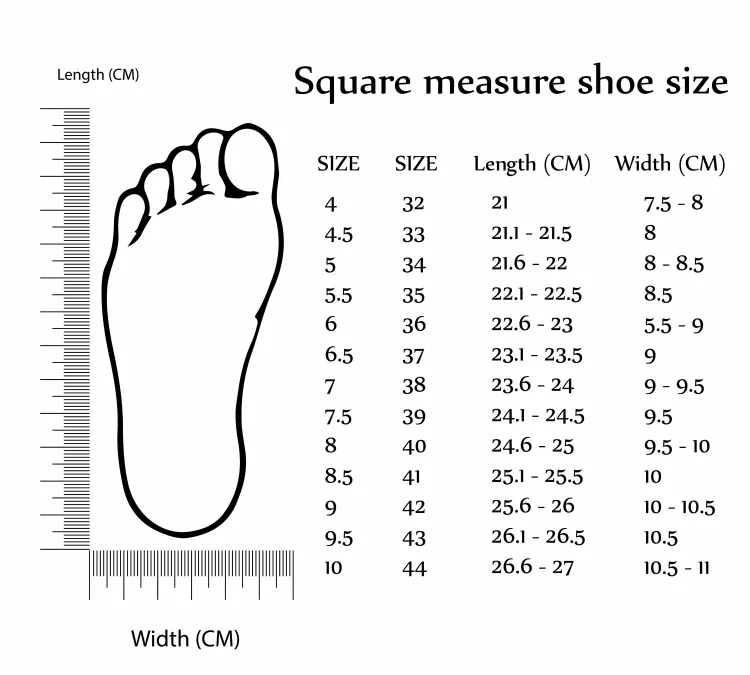
Foot size changes over time — after pregnancies, weight gain or loss, or injury. Measure your feet at least once a year, and always do it later in the day when your feet are at their largest. Use a Brannock device (the metal measuring tool in most shoe stores) or trace your foot on paper and measure both length and width from the traced outline. The size you've worn for the past decade may no longer be accurate.
What to Do When Your Work Shoes Are Too Big
Short-Term Fixes That Actually Work
If you're stuck with shoes that are slightly too large — no more than half a size — these fixes can buy you time while you sort out a replacement pair:
- Thicker socks — The fastest solution. A heavy wool or cushioned work sock fills extra volume and reduces slippage without interfering with fit in a negative way.
- Full-length insoles — A quality insole with a heel cup takes up volume throughout the shoe and significantly improves heel lockdown. This is the most effective single fix for a shoe that's slightly too big.
- Heel grips or heel pads — Stick-on pads inside the heel collar reduce slippage and prevent blisters at the back of the shoe. Best used in combination with an insole rather than on their own.
- Toe inserts or ball-of-foot pads — Small foam pads placed in the toe area fill excess length and stop your foot from sliding forward.
- Heel-lock lacing — This lacing technique uses the topmost eyelets to create a loop that locks your heel in place. Look it up — it costs nothing and makes a noticeable difference in heel stability.
Pro tip: Use a full-length insole for volume and a heel grip for lockdown together — both at the same time. Relying on either one alone rarely solves heel slippage completely if the shoe is at the upper limit of "slightly too big."
If the issue is fit width rather than length, the solution may be different entirely. Read our guide on how to stretch work boots to understand when and how stretching can bring a snug shoe into a better fit.
When to Return Them
Stop trying to fix it and return the shoes if any of the following are true:
- You have more than ¾ inch of toe space
- Your heel lifts more than ¼ inch with every step, even after lacing adjustments
- You've added insoles and heel grips and still feel the shoe moving
- You developed blisters after the very first wear
- The shoe is a full size too big — no padding combination fixes a full-size mismatch
Most reputable work boot brands have reasonable return policies on unworn or lightly worn footwear. Check the return window before you wear them through a full shift.

Fit Indicators at a Glance
Run through this table while standing in your shoes. It gives you a fast, objective read on where you stand — no guesswork required.
| Fit Indicator | Good Fit | Too Big |
|---|---|---|
| Toe space | ~½ inch (one thumb's width) | More than ¾ inch |
| Heel movement when walking | No lift at all | Lifts ¼ inch or more per step |
| Lateral (side-to-side) stability | Foot stays centered | Foot slides left or right |
| Foot sliding on stops | Stays in place | Slides forward into toe box |
| Lace tension throughout the day | Stays comfortable, no adjustment needed | Needs repeated tightening |
| Blisters after first shift | None | Heel or toe blisters form quickly |
| Toe position | Toes relaxed and flat | Toes curl or grip the insole |
| Gait on hard floors | Quiet, controlled footfall | Toe of shoe slaps the ground |
If you check two boxes in the "Too Big" column, take a closer look. Three or more boxes means the shoe is hurting you — it's just a matter of time before you feel it.
Frequently Asked Questions
How much toe room is too much in work shoes?
More than ¾ inch between your longest toe and the end of the shoe is too much. The sweet spot is about half an inch — enough room to wiggle your toes without your foot sliding forward when you stop or walk downhill. Anything beyond that and you're looking at blisters, toe curling, and chronic heel slippage.
Can shoes that are too big cause ankle injuries?
Yes, and it's more common than most workers realize. When your foot slides inside an oversized shoe, your ankle compensates with every single step. On uneven terrain, ladders, or slippery surfaces — all standard on job sites — that instability dramatically increases your risk of a rolled or sprained ankle. Proper fit is a genuine safety concern, not just a comfort preference.
Is it okay to wear thick socks to make shoes that are too big fit better?
Thick socks are a solid short-term fix if your shoes are only a half size too big. They fill volume and reduce movement. But if the shoe is a full size too large, thick socks won't give you proper heel lockdown or lateral stability — the shoe will still move, and you'll still develop blisters. In that case, return the shoes and size down.
Do feet actually get bigger as you age?
Yes. Not because the bones grow, but because the ligaments and tendons in your feet gradually loosen over time. This causes the arch to flatten, which lengthens and widens the foot. Most adults gain at least half a shoe size between their twenties and fifties. Measure your feet every year — don't assume the size you wore a decade ago is still right.
Key Takeaways
- The clearest signs your shoes are too big are heel slippage, toes sliding forward on stops, and more than ¾ inch of toe space — two or more of these together means the shoe is the wrong size.
- Thick socks, full-length insoles, and heel grips can patch a half-size mismatch, but no fix works reliably when the shoe is a full size too large — return them.
- Always measure both feet and size for the larger one, especially if you wear orthotics, thick work socks, or your feet tend to swell during long shifts.
- Oversized shoes are a genuine safety hazard on job sites — foot instability on uneven surfaces increases ankle injury risk, regardless of how comfortable the shoe feels standing still.


About Jason Flores
Jason Flores is a multi-talented individual whose unique journey has led him to blend his passion for craftsmanship and fashion into a creative endeavor. During his formative years, he found himself immersed in the world of handiwork, spending countless hours in his grandfather's workshop. These early experiences allowed him to develop a deep understanding of practical skills and a keen eye for detail.Simultaneously, Jason harbored an innate love for fashion, drawn to the artistry and self-expression it offers. As he grew older, he recognized the potential to combine his proficiency in craftsmanship with his fashion sensibilities. This realization led him to a path where he began to explore and write about the intersection of fieldwork fashion.
Get FREE Boots Gifts now. Or latest free toolsets from our best collections.
Disable Ad block to get all the secrets. Once done, hit any button below